








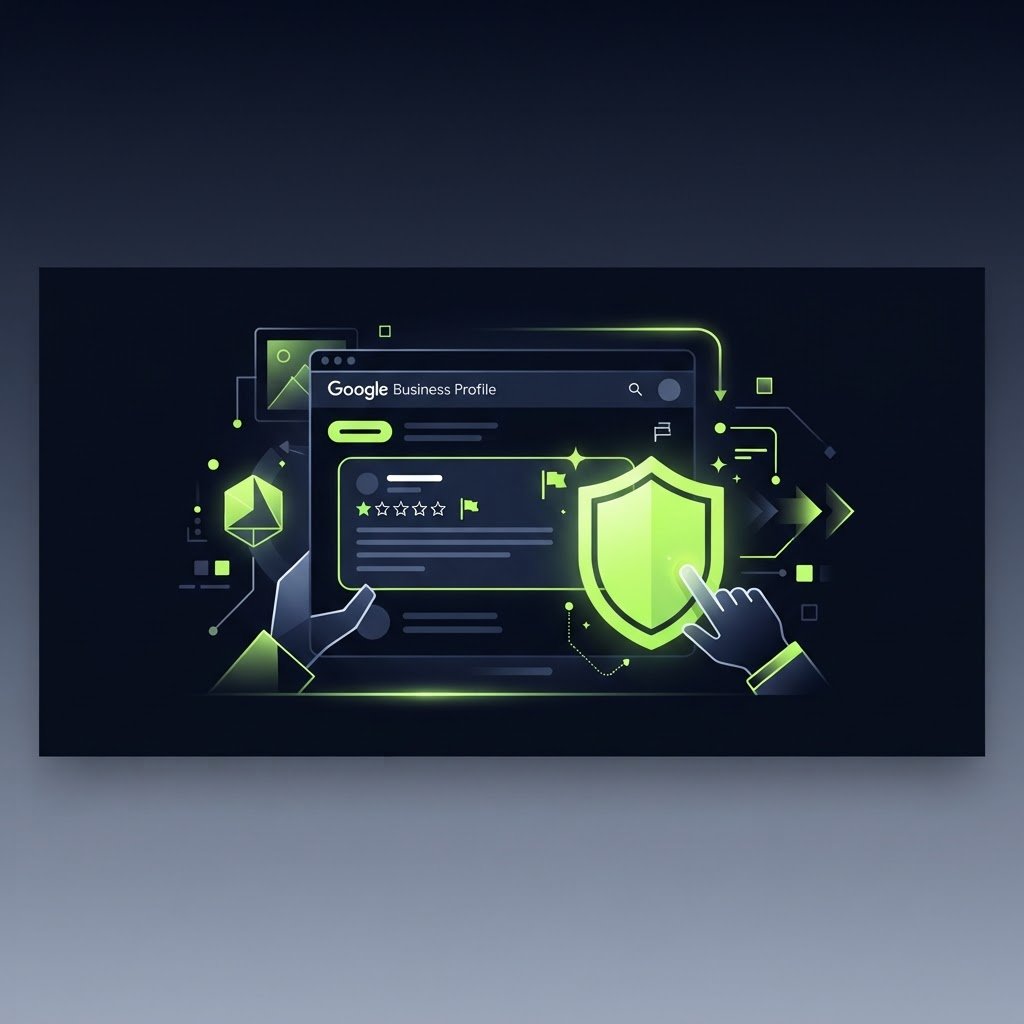
The essential
- Fake negative review on Google: what evidence to provide to have it removed?
- A fake negative review can undermine internet users' trust in just a few hours.
- When it does not correspond to any real service, contains invented information, or seems published with the intent to harm, it is legitimate to seek to have it reviewed by Google.
Summary
- 1. Check that the review actually violates Google's rules
- 2. Gather evidence before reporting
- 3. Report the review from the Google Business Profile
- 4. Prepare a clear appeal if the initial report fails
- 5. Respond publicly without acknowledging a non-existent situation
- 6. Know when to involve an expert
- Conclusion: act quickly, but methodically
Fake negative review on Google: what evidence to provide to have it removed?
A fake negative review can undermine internet users' trust in just a few hours. When it does not correspond to any real service, contains invented information, or seems published with the intent to harm, it is legitimate to seek to have it reviewed by Google. However, a simple disagreement with a client is not always enough: the platform distinguishes an unpleasant critique from content that violates its rules.
The most effective approach is therefore to build a precise, factual, and coherent file. It is necessary to identify what makes the review suspicious, keep the evidence, use the right reporting channel, and avoid public reactions that could worsen the situation. This guide presents a diagnostic and reporting method suitable for local businesses.
1. Check that the review actually violates Google's rules
Before requesting a removal, start by qualifying the problem. A review can be unfair or exaggerated without being automatically removed. However, several signals may indicate a violation: the author does not appear in any client file, the account describes an address or service that the business does not offer, multiple reviews use exactly the same wording, or the comment contains accusations unrelated to the purchasing experience.
Google is particularly interested in fraudulent content, conflicts of interest, fake commitments, harassment, offensive remarks, and publications that do not rely on a real experience. This distinction is important: your request must be based on an identifiable rule, not just on the fact that the rating is low.
2. Gather evidence before reporting
Take complete screenshots of the review: name or pseudonym, rating, text, date, permanent link, and any responses. Also, save the URL of the profile and, if possible, a dated copy of the context. Do not modify the screenshots or crop elements that allow the publication to be traced.
Then add any useful internal evidence: a calendar with no corresponding appointments, client software, invoices, exchanges with the actual client, or history showing that no order has been placed. These documents should not be published in the visible response on Google. They serve to explain the situation during an appeal and should only be shared through a secure channel.
If multiple reviews seem linked, prepare a simple table with dates, repeated formulations, concerned accounts, and common elements. A bundle of clues is often more convincing than an isolated assertion.
3. Report the review from the Google Business Profile
Log in to the account managing the profile, open the reviews section, and use the reporting option associated with the publication. Choose the reason closest to the observed violation, then briefly describe the facts. Avoid phrases like 'this review is impossible' or 'this person is lying': instead, indicate that you cannot find any interaction corresponding to the cited information and that you have verifiable elements.
Keep a copy of the report reference and note the date of submission. If Google requests additional information, respond in the same file to maintain consistency in processing. For complex cases, the GMB troubleshooting helps structure the diagnosis and prepare useful elements before the appeal.
4. Prepare a clear appeal if the initial report fails
An initial refusal does not mean that the review is valid. It may simply indicate that the first report lacked context or was not attached to the correct category. Reread the text, precisely identify the relevant rule, and write a chronological appeal: date of discovery, absence of identified experience, problematic elements, available evidence, and formulated request.
Stay factual and request a new review of the publication, not the removal of all negative reviews. A targeted file is more credible than a general request aimed at the company's reputation. You can also consult the Google My Business listing troubleshooting for assistance in situations where the standard procedure does not yield results.
5. Respond publicly without acknowledging a non-existent situation
During the review, a short response can reassure future clients. Do not disclose any personal data and do not publish screenshots of conversations. A professional wording can indicate that the business cannot find the described experience and invites the author to contact the establishment via a private channel with the details of their request.
Avoid threats, accusations of defamation, and endless exchanges. Each public response should show that you take feedback seriously while protecting confidentiality. If the review contains insults or harassment, do not respond in kind: keep the evidence and focus on reporting.
6. Know when to involve an expert
Professional intervention may be relevant when multiple suspicious reviews appear, when the profile is already under surveillance, when an appeal has been refused, or when the business does not know what information to provide. The analysis should then cover the profile's history, administrator accesses, concerned reviews, conflict signals, and the overall compliance of the profile.
An expert cannot guarantee that a review will be removed, as the decision lies with Google. However, they can avoid bad reports, clarify evidence, and organise a coherent file. For scheduling a GMB expert appointment, prepare the profile link, the URLs of the reviews, and dated screenshots.
Conclusion: act quickly, but methodically
In the face of a fake negative review, haste is rarely helpful. First, verify the reality of the violation, keep the evidence, report the content with the appropriate reason, and prepare a precise appeal if necessary. Meanwhile, a calm response protects internet users' trust during processing. The goal is not to make all criticism disappear, but to request the removal of content that does not correspond to a real experience or that violates Google's rules.
Free audit: rendezvous-depannagegmb.fr | calendly.com/contact-msfranceconcept | 04 65 84 00 27
John — MS France Concept
Does this topic concern your site? We will review your situation and tell you what to correct, without jargon.